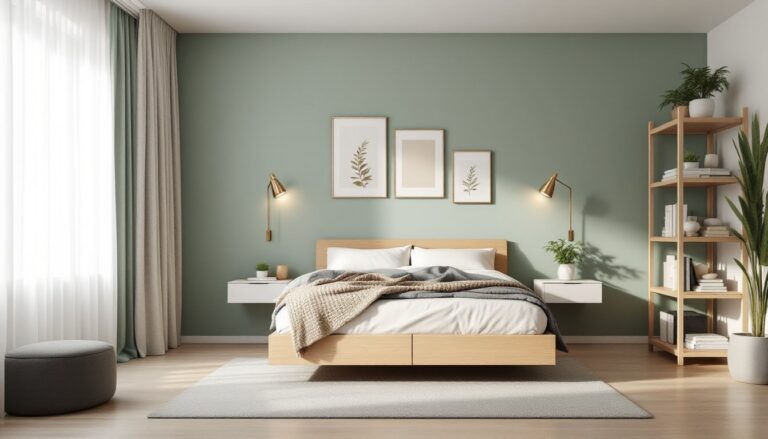
Dedicating an entire room to an office isn’t realistic for most homeowners, especially with rising housing costs and shrinking square footage. But that spare bedroom or even your primary sleeping space can pull double duty with the right approach. A bedroom office combo isn’t about cramming a desk into a corner and hoping for the best. It’s about deliberate design choices that let you clock in during the day and clock out mentally at night. Done right, the setup supports focused work hours without sacrificing sleep quality or turning your bedroom into a cluttered storage unit.
Table of Contents
ToggleKey Takeaways
- Strategic desk placement away from direct sightlines to your bed is crucial for small bedroom office combo setups, minimizing visual work reminders that interfere with sleep quality.
- Wall-mounted fold-down desks and floating corner desks are space-saving solutions that cost $20–$75 and keep floor space clear while maintaining a bedroom-focused aesthetic.
- Layered lighting with adjustable task lamps, dimmer switches, and smart bulbs supporting cooler temperatures (4000–5000K) during work and warmer tones (2700–3000K) at night improves both productivity and rest.
- Visual separation using bookcases, curtain tracks, area rugs, or accent paint creates psychological boundaries that signal when you’re in work mode versus bedroom mode without requiring permanent walls.
- Dual-purpose storage like platform beds with hydraulic lifts, floating shelves, pegboards, and closet redesigns keeps both office and bedroom items organized while maintaining a clutter-free appearance.
- A bedroom office combo succeeds when neutral wall colors, calming accent shades like blue and green, and minimal, professional decor support both focused work hours and quality sleep.
Why the Bedroom Office Combo Is the Perfect Solution for Modern Living
Remote work isn’t a temporary trend anymore, it’s the baseline for millions of professionals. That shift collided with a housing market where dedicated home offices remain a luxury most can’t afford. The bedroom office combo solves the space crunch without requiring a full renovation or adding square footage.
From a practical standpoint, bedrooms already have the infrastructure you need: electrical outlets, climate control, and typically better sound isolation than living areas. They’re also underutilized during working hours, making them prime real estate for a desk setup. The trick is creating physical and psychological boundaries so work doesn’t bleed into sleep, which affects both productivity and rest quality.
This approach works particularly well in spare bedrooms that double as guest rooms, or in primary bedrooms where couples have staggered schedules. The key is treating both functions as equally important rather than letting one dominate.
Strategic Furniture Placement for Dual-Purpose Success
Where you put the desk matters more than what desk you buy. Position your workspace to avoid direct sightlines from the bed whenever possible. This minimizes visual reminders of work when you’re trying to relax, and vice versa. If the room layout allows, place the desk perpendicular to the bed rather than facing it or backing up to it directly.
Consider the window placement carefully. Natural light helps with focus and mood, but glare on a monitor makes screen work miserable. Position the desk parallel to windows when possible, or use adjustable blinds to control light throughout the day. Keep the desk away from high-traffic pathways to and from closets or bathrooms, constant movement through your workspace disrupts concentration.
For shared bedrooms, corner placement works best. It tucks the office zone out of the primary sightline and uses otherwise wasted space. If you’re working with a narrow room, placing the desk along the same wall as the headboard (but at the opposite end) can work, just make sure there’s adequate clearance for the desk chair without encroaching on the bed area.
Space-Saving Desks That Won’t Overwhelm Your Bedroom
Wall-mounted fold-down desks are the gold standard for tight quarters. When closed, they read as a shallow cabinet or shelf. Look for models with 18-24 inch depth when open, enough for a laptop and notebook but not so deep they jut into the room. Most mount to studs with heavy-duty brackets rated for 50+ pounds, so installation requires a drill, level, and stud finder. If you’re renting, ask your landlord before putting holes in walls.
Secretary desks offer a similar fold-away function with traditional styling. These freestanding pieces include interior storage for office supplies and close up completely when not in use. They typically measure 30-36 inches wide, making them suitable for rooms where wall mounting isn’t an option.
Floating corner desks maximize dead space while keeping the floor clear underneath, which visually expands the room. These L-shaped units can be built with a single 2×8 or 2×10 board (actual dimensions 1.5 x 7.25 or 1.5 x 9.25 inches) mounted on brackets. Finish with polyurethane or paint to match your decor, and you’ve got a custom desk for under $75 in materials.
Compact writing desks with minimal footprints (36-48 inches wide, 20 inches deep) work when you don’t need much surface area. Skip ornate designs, simple parsons-style legs keep the visual weight light. Many DIYers achieve similar results by pairing hairpin legs (available in 16, 24, or 28-inch heights) with a finished plywood or butcher block top.
Visual Separation Techniques to Define Work and Sleep Zones
Physical dividers create mental boundaries that signal when you’re in work mode versus rest mode. Room dividers don’t need to be floor-to-ceiling walls, even a 4-6 foot tall folding screen behind the desk provides enough visual separation to compartmentalize the space. Look for options with shelving built in for bonus storage.
Bookcases perpendicular to the wall serve double duty as storage and partitions. A standard 72-inch tall bookcase positioned at the desk’s side creates a defined office nook without blocking light or airflow. Keep the side facing the bed styled with decorative items rather than file folders and work clutter.
Curtain tracks mounted to the ceiling let you draw fabric panels around the workspace. This solution costs less than $50 in hardware and can be installed by anyone comfortable with a drill and a ladder. Use heavier fabrics like canvas or linen rather than sheer curtains, you want opacity and some sound dampening. Many creative storage solutions can be adapted to help conceal workspace clutter when the workday ends.
Area rugs define zones without vertical dividers. Place one under the bed and a different style under the desk to create distinct visual territories. The contrast in texture and color helps the brain register the functional shift between areas.
Paint or wallpaper accents behind the desk establish a clear workspace without physical barriers. A single accent wall in a different color than the rest of the room draws the eye and frames the office zone. If painting isn’t an option, removable peel-and-stick wallpaper provides the same effect without permanent changes.
Smart Storage Solutions That Serve Both Functions
Dual-purpose storage keeps both work and bedroom items organized without visual chaos. Bed frames with built-in drawers underneath create storage for linens, off-season clothing, or office supplies that don’t need daily access. Platform beds with hydraulic lift mechanisms expose even more storage, the entire mattress lifts to reveal space for filing boxes, printer paper, or seasonal items.
Floating shelves above the desk (typically 8-12 inches deep) hold books, binders, and decorative items without eating floor space. Install them 16-18 inches apart for standard book and binder heights. Mount to studs with brackets rated for the load, a shelf full of books can weigh 30-50 pounds.
Closet organization systems can be reconfigured to include a workspace. If you’re working with a reach-in closet that’s underutilized, remove the hanging rod on one side and install a narrow 12-15 inch deep desktop at standard 29-30 inch height. Add a small filing cabinet or storage cubes underneath. This turns a closet into a cloffice (closet + office) that can be closed off completely after work hours.
Pegboards mounted above the desk provide vertical storage for supplies, headphones, charging cables, and small tools. A 2×4 foot pegboard costs under $20 and installs with screws into studs or drywall anchors rated for the weight. Paint it to match your walls or make it an accent feature.
Nightstands with drawers can store both bedtime essentials and work supplies if you organize thoughtfully. Use drawer dividers to keep categories separate, phone chargers and reading materials in one section, notepads and pens in another.
Lighting Strategies for Productivity and Relaxation
Lighting has to shift between focused task lighting for work and ambient lighting for rest. Overhead fixtures alone won’t cut it, you need layered lighting with independent controls.
Desk lamps with adjustable arms let you direct light exactly where you need it for reading documents or reducing screen glare. Look for LED task lamps with color temperature controls (measured in Kelvin). Cooler light around 4000-5000K promotes alertness during work hours: warmer light 2700-3000K helps you wind down in the evening. Many modern lamps include both modes in one fixture.
Dimmer switches on overhead lights give you control over ambient brightness. Replacing a standard switch with a dimmer is a straightforward DIY project, just shut off power at the breaker, remove the old switch, and wire in the new dimmer following the manufacturer’s diagram. This typically takes under 30 minutes and requires only a screwdriver and wire stripper.
Wall sconces flanking the bed provide reading light that doesn’t spill into the workspace. Mount them 18-24 inches from the headboard center and 4-6 inches above the mattress top for optimal reading angles. Hardwiring requires basic electrical skills and may need a permit depending on your jurisdiction, if you’re not confident working with electrical, hire a licensed electrician.
Smart bulbs in existing fixtures let you control color temperature and brightness from your phone. This allows you to create lighting scenes, “work mode” with bright, cool light and “sleep mode” with dim, warm light, without installing new fixtures. Initial cost runs $10-15 per bulb, but they last years and don’t require any installation beyond screwing in a bulb.
Avoid placing monitors directly in front of windows. Backlighting causes eye strain and makes video calls difficult. If your desk must face a window, use blackout shades during peak glare hours.
Color Schemes and Decor That Balance Professional and Restful Vibes
Color affects mood and productivity, so choose a palette that supports both work focus and sleep quality. Neutral bases, grays, taupes, soft whites, create a calm foundation that won’t overstimulate when you’re trying to rest but won’t feel dull during work hours.
Add accent colors strategically. Blues and greens promote both concentration and relaxation, making them ideal for bedroom offices. Reserve brighter, energizing colors like yellows or oranges for small doses in the workspace only, a desk organizer, chair cushion, or artwork above the desk rather than wall paint that affects the whole room.
Matte finishes on walls reduce glare and create a softer, more residential feel than glossy or semi-gloss paints. Use eggshell or satin (10-25% gloss) for easy cleaning without the institutional look. Paint coverage typically runs 350-400 square feet per gallon for standard walls in good condition.
Decor choices should acknowledge both functions. Skip the motivational posters, they’re visual noise when you’re trying to sleep. Instead, choose artwork that complements both moods, like landscapes, abstract pieces with calming colors, or black-and-white photography. These read as bedroom-appropriate while maintaining a professional backdrop for video calls.
Minimal window treatments keep the space from feeling cluttered while controlling light. Simple roller shades or horizontal blinds are practical and clean-lined. If you prefer curtains, choose solid colors that coordinate with your wall paint rather than busy patterns that compete for attention.
Keep surfaces clear. A cluttered desk bleeds visual chaos into the bedroom, while visible work piles at bedtime increase stress. Use decorative storage boxes to corral supplies and paperwork at the end of each workday, this simple habit reinforces the mental transition from office to bedroom.