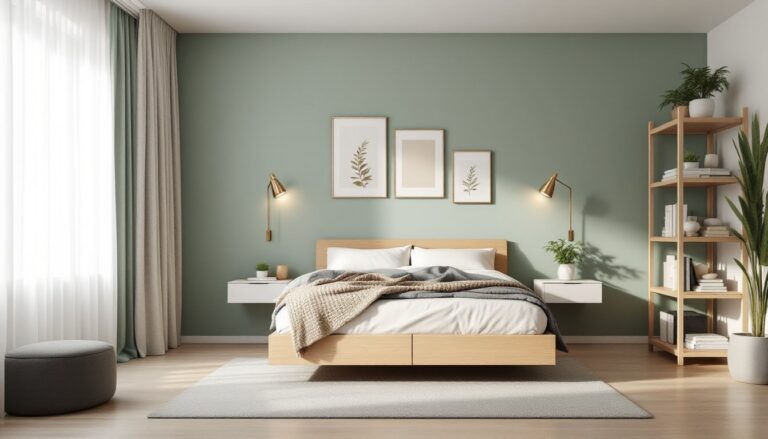
A bedroom should feel like a retreat, not an afterthought filled with mismatched hand-me-downs. But redoing a space doesn’t mean dropping thousands on designer furniture or hiring a pro. With some strategic choices and a bit of elbow grease, anyone can turn a bland bedroom into a space that actually reflects their style, without maxing out a credit card. The key is knowing where to invest time versus money, and which quick fixes deliver the most visual impact. This guide breaks down practical, budget-conscious upgrades that look intentional, not cheap.
Table of Contents
ToggleKey Takeaways
- Paint is the most cost-effective transformation tool for men’s bedroom ideas on a budget, delivering dramatic visual impact for under $100 in materials on an average bedroom.
- A strategic color palette using deep charcoals, navy blues, olive greens, or warm grays creates a masculine, modern look that hides imperfections and feels intentional rather than budget-conscious.
- DIY storage solutions like floating shelves, pegboards, and repurposed furniture can look expensive while costing a fraction of custom alternatives.
- Layered lighting with wall sconces, pendant fixtures, and LED strip lights creates a comfortable atmosphere without the harsh shadows of overhead lighting alone.
- Thrift stores and online marketplaces offer one-off statement pieces with character that transform a space from generic to uniquely personal at a fraction of retail cost.
- Focus on fundamentals like quality bedding, a simple headboard, and intentional decor placement rather than impulse purchases to complete a cohesive bedroom design.
Start With a Strategic Color Palette
Paint is the single most cost-effective transformation tool available. A gallon of quality interior paint covers roughly 350–400 square feet and costs between $30–$50, making it possible to repaint an average bedroom (12’×12′ with 8′ ceilings) for under $100 in materials.
For a masculine, modern look, stick with a cohesive palette: deep charcoals, navy blues, olive greens, or warm grays. These colors hide imperfections better than lighter shades and create a grounded, intentional feel. Avoid stark white, it reads sterile in a bedroom. If the whole room feels too dark, paint one accent wall behind the bed and keep the other three walls a complementary neutral.
Prep work matters. Wash walls with a TSP substitute to remove oils and grime, fill nail holes with spackle, and sand smooth. Skip this, and the paint won’t adhere properly. Use painter’s tape on trim and edges, and apply two coats with a roller for even coverage. A quality angled brush handles corners and cut-ins cleaner than a foam roller.
If painting the ceiling, go with flat white. It reflects light better and makes the room feel taller. For walls, use eggshell or satin finish, they’re more durable and easier to wipe down than flat paint.
Upgrade Your Bed Without Buying a New One
A bed anchors the room visually, but replacing a mattress and frame is expensive. Instead, focus on what’s visible: the headboard, bedding, and frame aesthetic.
Build a simple plank headboard. Use three or four 1×6 or 1×8 pine boards (actual dimensions: 3/4″ × 5.5″ or 7.25″) cut to the width of the bed. Sand them smooth, stain or paint to match the room, then mount horizontally to the wall with L-brackets or a French cleat for a floating effect. Total cost: $40–$60 depending on wood choice. If going with a darker stain, apply a pre-stain wood conditioner to prevent blotching on soft pine.
Swap out mismatched sheets for a solid duvet cover in a neutral color, charcoal, navy, or olive. Skip busy patterns: they cheapen the look. A duvet cover runs $30–$50 and instantly makes the bed look pulled together. Add one or two throw pillows in complementary tones, but don’t overdo it, this isn’t a hotel display.
If the bed frame is dated or damaged, wrap the base in a simple bed skirt or build a low-profile platform frame using 2×4 and 2×6 lumber. A basic platform frame for a queen mattress costs around $50–$75 in materials and can be built in an afternoon with a drill, saw, and wood screws. Sand all edges to avoid splinters, and finish with a coat of stain or paint.
DIY Storage Solutions That Look Expensive
Clutter kills a clean aesthetic, but custom storage doesn’t require custom pricing. Open shelving, pegboards, and simple cabinetry provide both function and style.
Floating shelves are the easiest win. Pick up pre-cut wood shelves or use 1×10 or 1×12 boards (actual dimensions: 3/4″ × 9.25″ or 11.25″). Mount them with heavy-duty floating shelf brackets rated for at least 50 lbs per shelf. Studs are spaced 16 inches on center in most walls, so use a stud finder and hit at least two studs per shelf for stability. Finish with stain or paint to match the room’s palette.
For a more industrial look, install a pegboard wall using 1/4″ tempered hardboard pegboard. Frame it with 1×2 furring strips to create clearance for the pegs, then mount the strips into studs with 3-inch wood screws. Paint the pegboard the same color as the wall for a cohesive look, or go bold with a contrasting accent color. Hang hooks, small bins, and organizers to keep everyday items off surfaces.
Repurpose an old dresser or nightstand with a fresh coat of paint and new hardware. Remove the old pulls, fill the holes with wood filler, sand smooth, then drill new holes for modern bar pulls or knobs ($2–$5 each at home centers). A quart of paint and $20 in hardware can make a thrift store find look custom. Many furniture painting tutorials walk through prep steps like priming and topcoat options for durability.
Budget-Friendly Lighting Hacks for Ambiance
Overhead lighting alone creates harsh shadows and a flat atmosphere. Layered lighting, ambient, task, and accent, makes a space feel intentional and comfortable.
Replace a builder-grade ceiling fixture with a simple semi-flush mount or industrial-style pendant ($40–$80). Make sure power is off at the breaker before touching any wiring. Most ceiling fixtures connect with basic wire nuts: black (hot) to black, white (neutral) to white, and bare copper (ground) to green or bare. If unsure, hire an electrician, electrical work done wrong is a fire hazard and may not be code-compliant per NEC Article 210.
Add plug-in wall sconces to avoid running new electrical. Mount them with screws into studs or use drywall anchors rated for the fixture weight. Run the cord down behind furniture or use a cord cover channel that can be painted to blend with the wall. Position sconces 60–66 inches from the floor (centered on the switch plate height) for balanced lighting.
LED strip lights behind the headboard or under floating shelves add ambient glow without taking up space. Use warm white (2700K–3000K) LEDs for a cozy feel, not the cool blue-white that looks clinical. Peel-and-stick options work fine on clean, dry surfaces, but for longevity, use the included adhesive backing plus a few dabs of construction adhesive at joints and corners.
Swap out any remaining incandescent bulbs for LED equivalents. They use about 75% less energy, last years longer, and don’t generate as much heat. Dimmable LEDs paired with a dimmer switch (if compatible) let you adjust the mood, install a standard rotary or slide dimmer rated for LED loads.
Thrift and Repurpose: Finding Affordable Statement Pieces
Big-box stores sell the same mass-produced decor everyone else has. Thrift stores, estate sales, and online marketplaces offer one-off pieces with actual character, often for a fraction of retail cost.
Look for solid wood furniture that’s structurally sound but cosmetically tired. A scratched dresser or dated nightstand can be stripped, sanded, and refinished. Use 120-grit sandpaper to remove old finish, then step up to 220-grit for smoothness before staining or painting. Apply a polyurethane topcoat (satin or semi-gloss) for durability, especially on horizontal surfaces.
Old doors, shutters, or wood pallets can become headboards, room dividers, or shelving with minimal work. Sand rough edges, treat for splinters, and finish to taste. Pallet wood varies in quality, avoid any marked “MB” (methyl bromide treatment). Look for “HT” (heat-treated) stamps, which are safer for indoor use.
Framed artwork, mirrors, and vintage posters add personality without custom framing costs. A large mirror (at least 24″×36″) leans against a wall or mounts above a dresser to visually expand the space. Thrift store frames can be spray-painted to match the room’s color scheme, use a primer for slick surfaces if the frame is glossy or laminated.
Many room makeover stories highlight how small vintage finds, a leather chair, an industrial lamp, or reclaimed wood shelves, anchor a space and give it a collected, lived-in feel rather than a showroom sterility.
Add Personality With Minimal Investment
A room doesn’t need to be packed with decor, but a few intentional touches prevent it from feeling like a hotel.
Texture matters. Add a wool or jute area rug (5’×7′ or 8’×10′ depending on room size) to soften hard floors and define the bed zone. If budget is tight, layer a smaller accent rug over a larger neutral base. Rugs also dampen sound, helpful in apartments or multi-level homes.
Hang a large-scale piece of art or a gallery wall above the bed or on the longest wall. Use a level and picture hanging wire or D-rings on the back of frames for a clean install. For heavy frames (over 10 lbs), anchor into studs or use toggle bolts rated for the weight. Group smaller frames in odd numbers (3, 5, or 7) for visual balance.
Introduce one or two plants, real or high-quality faux. A snake plant or pothos requires minimal care and tolerates low light. Use simple ceramic or concrete planters that complement the room’s palette. If going faux, spend a bit more for realistic options: cheap plastic plants look cheap.
Keep surfaces mostly clear. One or two items per nightstand or dresser, an alarm clock, a book, a small tray for keys and wallet, prevents visual noise. Open storage like floating shelves should be styled with intention: a few books, a small plant, maybe a framed photo. If it doesn’t serve a purpose or add to the aesthetic, leave it out.
For small space solutions in compact bedrooms, prioritize multi-functional furniture: a bench with storage, a nightstand with a drawer, or under-bed storage bins.
Conclusion
A budget doesn’t mean settling for a boring or generic bedroom. With paint, DIY storage, thrifted finds, and smart lighting choices, it’s entirely possible to create a space that feels cohesive, comfortable, and uniquely personal. Focus on the fundamentals, color, bedding, lighting, and a few statement pieces, and skip the impulse buys that don’t serve the overall vision. Most successful room transformations come down to prep work, patience, and knowing where to invest effort versus cash.